HR
HR
After the latest episode of Sindikalni megafon, colleague Ivor Kruljac reacted to the comments about young journalists. We publish his commentary in full and invite colleagues to share their own experiences and views. In the next episode of the Sindikalni podcast, we are arranging a guest appearance by colleague Kruljac and another young journalist.
Author: Ivor Kruljac
The episode of Sindikalni megafon on the important topic of layoffs at N1 — and the stress and problems journalists face — took a completely wrong turn when the guests and host started speaking very condescendingly about younger colleagues, often blaming them for things that cannot be generalized by age but can be attributed to individuals in our profession, both young and inexperienced, as well as older and experienced. Fortunately, there are many journalists who respect young colleagues and give them opportunities, and it is precisely these examples that should be highlighted in union content that must condemn ageism, not support it.
It was sometime in December 2022 when, at a small gathering with a few journalist colleagues, I got into a conversation with a guy from the younger generation of trade unionists — from none other than the Croatian Journalists’ Union (SNH). I was 25, almost 26, and I had entered practical journalism — both volunteer and paid work — almost immediately at the beginning of my university years in late 2015.
The conversation was pleasant, but slowly took on the tone of a Jehovah’s Witness trying to convert me, when this SNH guy asked whether I was a union member.
“I will be when I turn forty,” I told him — explaining that as a journalist in my twenties, following the work of SNH (and HND), I didn’t feel these organizations cared for the well-being of all journalists, but primarily the older generations. Worse, young people were often belittled and treated as a problem, usually through the narrative: “They fired us experienced journalists and brought in young and inexperienced ones.” Despite his insistence that I should join and ignore such statements, I am still not a member at 28. I still have a dozen years until forty, and I am certainly not going to fund a structure that sees me and my peers not as colleagues, but as a problem.
Sindikalni megafon: Testimonies about the difficulties of journalism turned into an attack on young journalists
My impression of SNH as an organization younger journalists cannot rely on unfortunately only grew last week, after watching the episode of Sindikalni megafon where host Josip Šarić spoke with Sandra Križanec and Ilija Jandrić, well-known faces from N1 who were laid off during the station’s mass firings. The episode was supposed to — and to be fair, in many ways did — discuss the difficult conditions journalists face, which most of us have encountered at some point. But from the very beginning, it veered into ageist remarks about young journalists from both guests and the host.
The condescending — and in many cases completely inaccurate — comments were so disconnected from reality that you’d think the speakers had never met a colleague who wasn’t born in the ’70s or ’80s. There were many examples, but let’s highlight just a few, which appeared right at the beginning of the episode — and likely caused many young journalists to switch it off immediately.
“That’s this Generation Z or whatever they’re called, I have no idea. They’re not like us — if you don’t immediately give them money, they move on. They think they’re worth something. I don’t think that’s good for those young people; they’re not building culture and they don’t think ahead,” said Križanec, seemingly annoyed that young people — like older ones — want to be paid for their work.
This came after Šarić recalled that he “worked his first six months at HTV for free,” adding that many young people give up early because journalism is hard and takes commitment. Then Jandrić followed with comments implying that people in their fifties are inherently better journalists, even hinting at a conspiracy theory — a step away from claiming young journalists are lizard people.
“Unfortunately, there is falling demand for people who know the job, for relevant and experienced journalists. They prefer hiring beginners who will copy-paste texts, produce clickbait, and I don’t know where this is all going,” said Jandrić.
There was more chest-beating about how “older laid-off journalists are worth more,” but you can see that for yourself if you watch the episode. Whether the podcast will follow up with an episode where young journalists can share their experiences remains to be seen. Meanwhile, let’s at least counter ageism in writing.
e rewriting short, routine news items? Through all that experience — including student internships — I learned a great deal, and received valuable feedback from older colleagues, and more importantly, from editors who ultimately decided whether my work would be published.
Only when I received my first paid engagement did it become expected that I would also work on short news items or topics that I personally wasn’t passionate about — but would still approach them professionally. Because that is a matter of ethics and professionalism, and because I was finally being paid for my work. This is precisely why it is crucial to distinguish between unpaid volunteering — where you can dictate your own terms, what you work on and how — and paid employment, where you are compensated and can then justify taking on a wider range of tasks.
Regarding Šarić’s comment about working six months at HTV for free, I don’t know what his arrangement was, but unless he was allowed to work only on topics he found personally meaningful and was learning under the mentorship of older colleagues, he should not have accepted unpaid labor — he should have insisted on a salary, since he was doing the same work as all the other journalists at the station. Just because unpaid labor was “normal” in the past does not mean it is acceptable today. Slavery was also once normal, yet no one today argues that its disappearance is something to mourn.
And if younger journalists today refuse unacceptable working conditions, and demand to be paid for their labor, anyone who believes in union work should support them — not criticize them.
Furthermore, the notion that young people sometimes quit journalism early should not be a source of anger. Journalism is a “free profession”: anyone can try, submit their text, and see if it gets published. If someone tries and realizes it’s not for them — all the better. The real problem is when people enter journalism without respecting ethical standards or without the willingness to put in real effort. Those people exist in every generation — young and old — and that has nothing to do with age, but with personal integrity.
And older generations also leave journalism. Even Križanec herself said she is no longer a journalist and now works in PR at the Ministry for Demography and Croatian Diaspora. So why criticize young people for leaving, when older journalists are doing the same?
Everyone should have both the right to try — and the right to walk away.
No one is born experienced: Everyone was once given a chance to learn and grow
As for the complaints about young journalists being inexperienced, as Jandrić stated, it is sad when “experienced” colleagues forget their own beginnings. I’ve met many older journalists of widely varying skill. Some taught me a lot, some showed me — through their own bad habits — what not to do in this profession.
But I have never met a journalist born with thousands of interviews and reports under their belt. Experience is earned, not given.
Walter Cronkite was not born a legendary news anchor — he had to learn, develop, make mistakes, and grow.
If someone has been a journalist for 30 years, it means that 30 years ago they took their first steps. They were once the beginner they now criticize.
And yes, young people can sometimes think they know everything — young people in every field do. But when reality hits, they either quit or learn and improve. Would anyone enter a demanding profession like journalism without confidence or ambition? Is that even possible?
A bigger problem is when older people think they already know everything and refuse to learn anything new.
Journalism is interesting precisely because there is always more to learn — new tools, new challenges, new forms. I personally always wrote, photographed, and gathered material in the field, but at one point decided I wanted to learn video. I arranged with my editors to learn camera work and framing — and the colleague who taught me was five years younger than me. Should I have felt too proud to learn from someone younger? Should older journalists feel ashamed that sometimes I help them solve a problem — and vice versa?
Of course not.
And no — young journalists are not here just to copy-paste. At press conferences, in newsrooms, and in the field, there are plenty of young journalists doing interviews, research stories, and field reporting every day. Desk work is also done by both young and older journalists. The healthy newsroom is one where everyone collaborates based on their strengths.
Journalists need solidarity, not division by age
At the end of the day, ageism in journalism — whether aimed at the young or the old — is harmful. Journalists should be judged by their work ethic and quality, not age, gender, religion, ethnicity, or anything else.
Fortunately, in my experience, most journalists do understand this — young journalists do get opportunities, and many older colleagues do support them. If only such examples got more visibility, especially through SNH’s platforms.
Journalism is in crisis — the work is underpaid, unstable, stressful, and demanding. And these pressures affect everyone — not only older journalists. Young journalists are not the problem. They are suffering the same conditions.
If we want better journalism and better working conditions, then we must work together. Publicly belittling younger colleagues only deepens the divide and weakens our collective ability to advocate for change.
Simply put: The union must condemn ageism
I am personally grateful for the opportunities I fought for and for the colleagues who supported me, gave feedback, and helped me grow. But not everyone is that lucky.
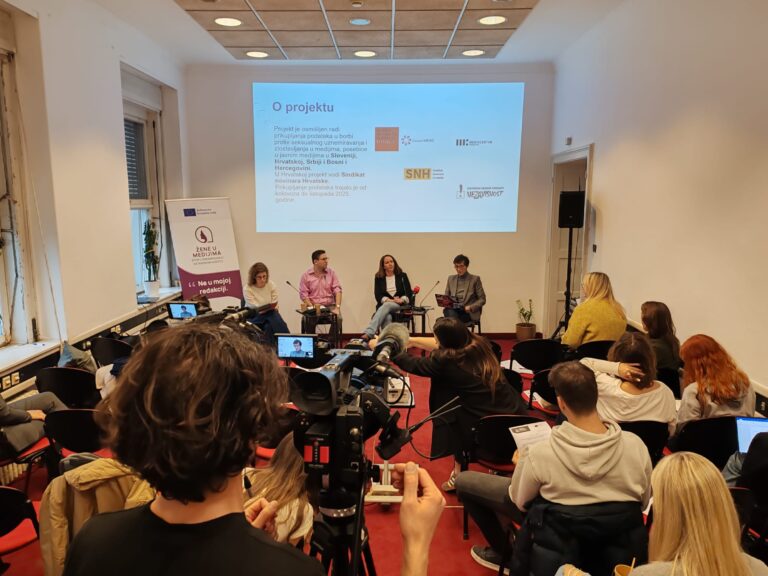
SNH has been addressing serious issues in our profession — for example, their “Women in Media” project, which focuses on sexual harassment and the belittling of women in journalism.
Ageism deserves the same level of attention. SNH must condemn any unfounded generalization of an entire group based on age. Doing so would not only encourage young journalists to join and participate, but would also make our professional environment better.
Just as young journalists — from their very first news story — grow, learn, and become better every day.
[:]