HR
HR
Every second woman journalist has experienced sexual harassment: results of the study on violence against women in Croatian media presented. Half of all cases of sexual harassment come from newsroom colleagues, and a third from supervisors, according to a major comparative regional study on sexual harassment of women in the media.
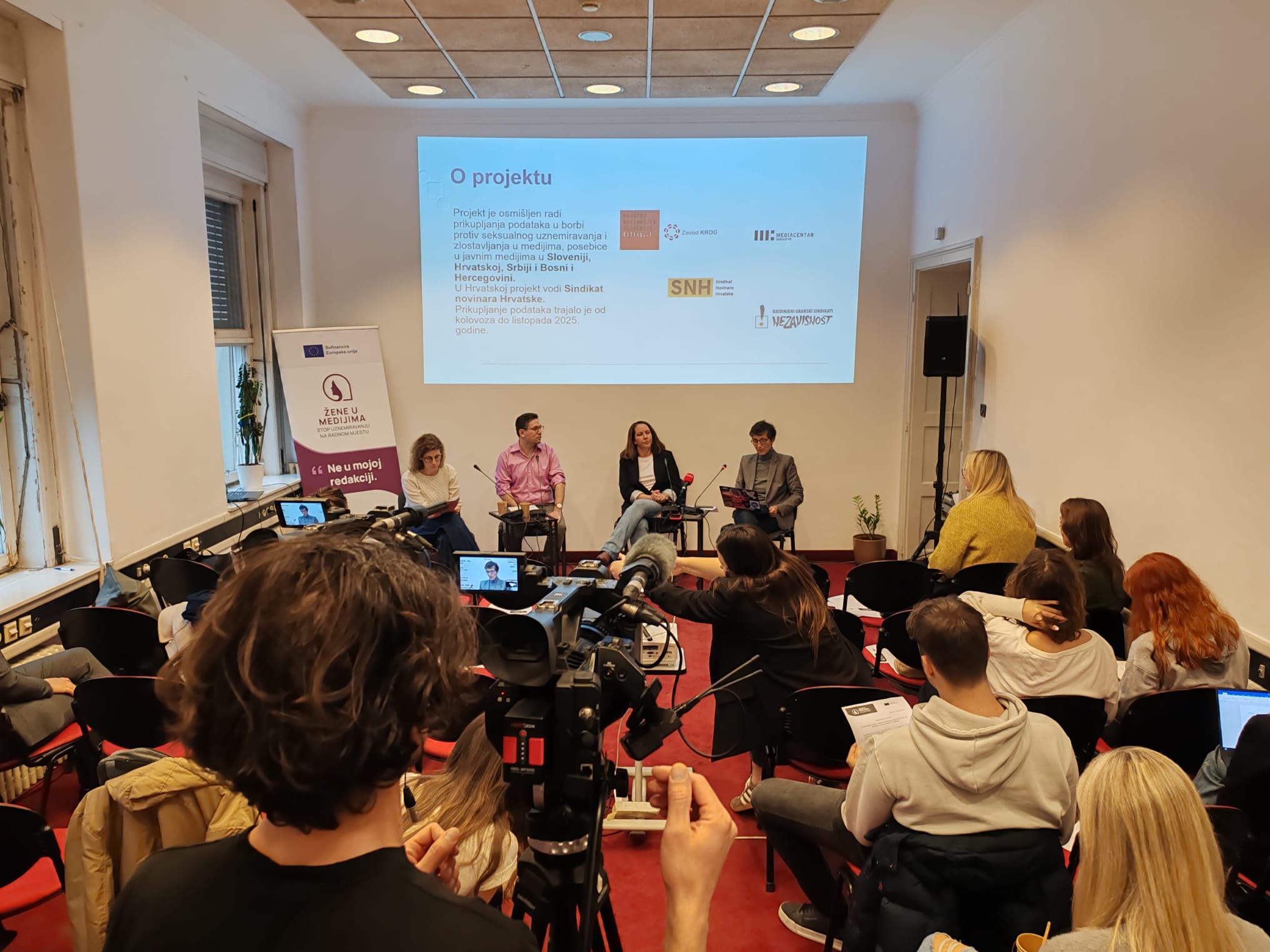
On the International Day for the Elimination of Violence against Women, the results of the regional research Women in the Media – Ending Workplace Harassment were presented, revealing the extent of sexual harassment, violence, discrimination, and violations of labour rights experienced by women journalists. The research was conducted in 2025 in Slovenia, Croatia, Serbia, and Bosnia and Herzegovina, with the Croatian part led by the Croatian Journalists’ Union and carried out by Dina Vozab and Emil Čančar.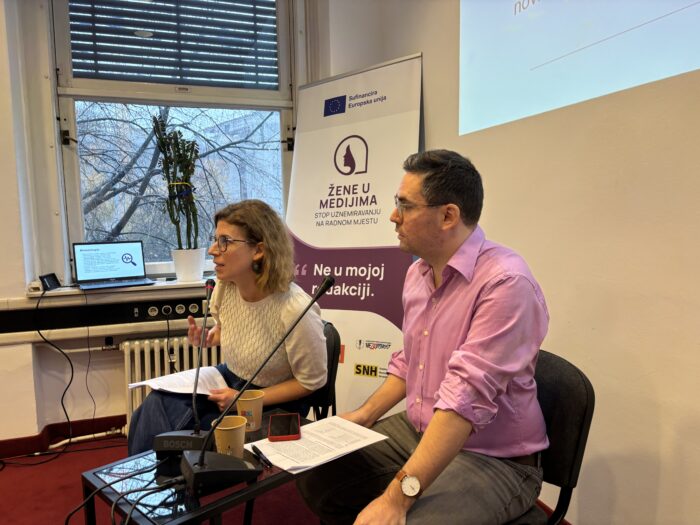
Every second woman working in the media has experienced sexual harassment, with half of the cases coming from newsroom colleagues and a third from supervisors, said Dina Vozab and Emil Čančar on Tuesday at the Croatian Journalists’ Association headquarters in Zagreb, presenting the results of a major comparative regional study on sexual harassment of women in the media. According to a survey conducted by the Trade Union of Croatian Journalists’ (TUCJ) among more than 600 women media workers, most media outlets lack preventive measures and clear procedures for handling cases of sexual harassment. Additionally, 50 percent of female journalists do not know whether existing protection mechanisms cover sexual harassment, and the vast majority of cases go unreported due to fear of losing their job, retaliation, and distrust in their newsroom.
According to research by the Croatian Journalists’ Association, a total of 86 attacks and threats against journalists and media outlets were reported in Croatia between 2021 and 2024.
TUCJ’s results show that nearly 60 percent of surveyed female journalists have not experienced threats or physical attacks, while almost 29 percent have experienced threats, and 12.5 percent have received death threats. In most cases (45 percent), the perpetrators were members of the public whom journalists encountered on assignment, and in 40 percent of cases, the perpetrators were individuals they were reporting on. As many as 44 percent of female journalists report discrimination based on sex or gender, and the most common violations of labor rights include disregard for working hours and the right to rest. Unwanted comments based on gender and women’s sexuality were experienced by 57 percent of female journalists, with newsroom colleagues identified as the most frequent source. They are also the most common perpetrators of sexual harassment in newsrooms (48 percent), slightly more often than supervisors (33 percent).
When it comes to sexual assaults, colleagues in the newsroom are again the most frequent perpetrators (60 percent), followed by supervisors (30 percent). Overall, 39 percent of women reported experiencing sexual assault. Insights from interviews suggest that journalism today is affected by both internal harmful factors (poor working conditions, discrimination related to motherhood, everyday inappropriate comments, fear of stigmatization when reporting attacks or harassment) and external ones (violence in everyday life, pervasive online abuse, rhetoric from politicians that fuels attacks by portraying journalists as legitimate targets…).
The regional survey included more than 600 women working in the media, and the results show that every second woman journalist/media worker has experienced sexual harassment; that half of the cases come from colleagues in the newsroom and a third from superiors; that most media outlets have no preventive measures or clear procedures; that 50% of women journalists do not know whether existing protection mechanisms cover sexual harassment; and that the vast majority of cases remain unreported due to fear of losing their jobs, retaliation, and a lack of trust in the newsroom. These findings point to deeply rooted patterns of inequality and violence that shape the everyday reality of women journalists in Croatia and the region. The consequences are not only personal and professional—they also affect the quality of journalism, as fear, self-censorship, and the absence of institutional support directly threaten media freedom.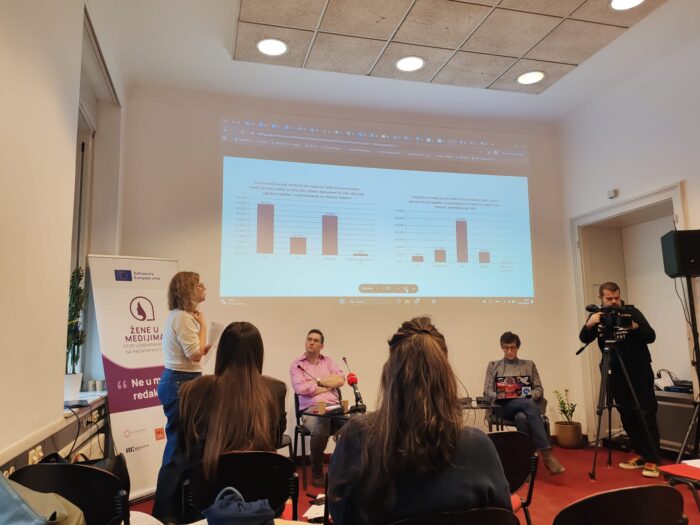
The research also shows that existing protection mechanisms are insufficient or unknown, further discouraging women from reporting violence. For this reason, one of the key conclusions of the study is the urgent need to introduce clear procedures, training, and zero-tolerance policies so that newsrooms finally become safe workplaces rather than places where violence is silenced and normalised.
Based on these results, the project will continue its cooperation with partner organisations and newsrooms to develop concrete proposals and tools for building effective mechanisms to protect women journalists. The goal is to empower newsrooms to establish clear protocols, zero-tolerance policies, and support systems that will ensure safe working conditions and timely responses to cases of violence, harassment, or discrimination.
The project Women in the Media is carried out by the Croatian Journalists’ Union; the Culture, Arts and Media Union “Nezavisnost” (Serbia); Mediacentar Sarajevo (BiH); Zavod Krog (Slovenia); and the Slovene Association of Journalists, with co-funding from the European Union through the CERV programme. This partnership network enables the first comprehensive comparison of experiences of women in the media across the region, with the aim of identifying common challenges and creating a basis for regional and national protection measures. The project’s goal is to create a safer, more inclusive, and more equitable working environment for women in the media. It advocates for systemic changes, including the recognition and sanctioning of all forms of harassment, the strengthening of institutional protection mechanisms, the development of newsroom protocols, and the creation of workplaces where women can work professionally and safely, without fear of retaliation.